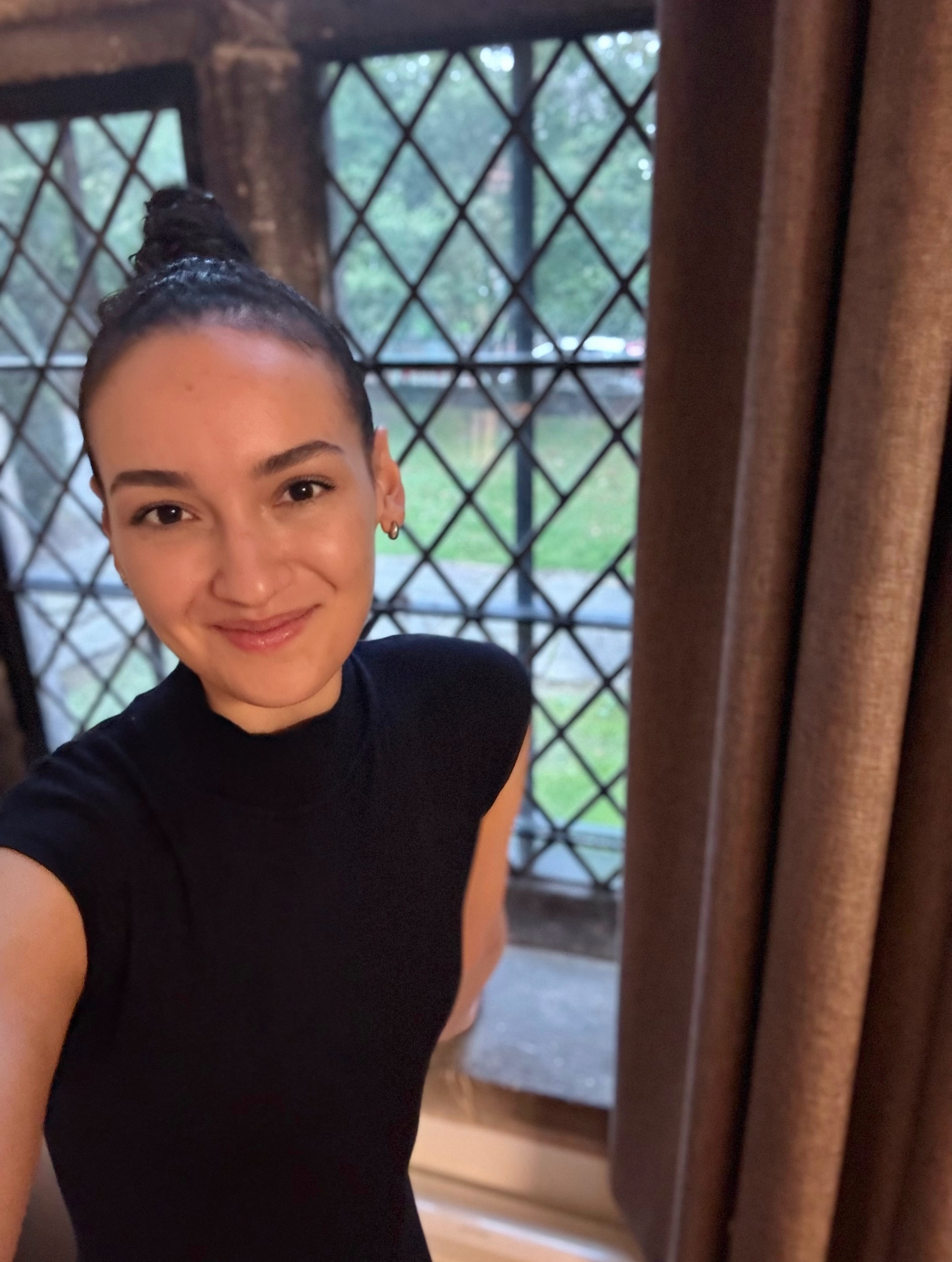
Who I am
Digital Media MA student at the University of Leeds
.jpeg)
Setting up my portfolio website helped me understand how digital spaces shape the way we present ourselves and our work. I learned how web templates can balance creativity with functionality, changing how information is structured and perceived online. This workshop also deepened my awareness of how design choices influence accessibility and user experience online.
Creating a web scrape helped me see how online content can be broken down into bits of data that show patterns and connections across different platforms. I realized how powerful these tools are for collecting large amounts of information, but also how much they miss when it comes to context or meaning beyond the code.
Using OutWit Hub and WebScraper.io helped me get a hands-on sense of how data lives beneath the surface of web pages. I learned how to pick out specific elements from the HTML and saw just how much information websites hold. It also made me appreciate how useful scraping can be for research, but also how tricky it can get when sites are inconsistent or when the data doesn’t load as expected. It also made me think more about the ethics like whether it’s right to collect data just because it’s publicly visible online.
Working on the “University-led Data Collection” Scenario 2 made me think about how data can reflect and even reinforce power dynamics in education. As my group designed a survey about how students use generative AI, I noticed how the way we define and categorize “digital engagement” can leave out certain experiences or voices. The readings by Crawford and D’Ignazio & Klein also helped me see how bias often starts in the way data is collected and labeled. It also made me more aware of the data I share on platforms like Copilot or ChatGPT, and how those systems use it to shape what I see and how I interact online.
In this week’s workshop, our task was to take the survey data we collected on how students use generative AI and start visualizing it in Excel. The goal was to see how turning numbers into visuals can help make patterns easier to understand, but also to think about how our design choices shape what people take away from the data. Once we started working with our survey results, I realized how much the way we worded questions affected what we could actually show in the visualizations. A lot of responses used options like “somewhat likely” or “very likely,” and with multiple different tools and academic tasks included included in our questionnaire, it was difficult to narrow down a way to present the answers concisely.
Something that stood out in the survey results was that students who answered seemed much more comfortable using AI for brainstorming or proofreading than for creative or critical work. It showed a kind of boundary between where students may trust technology and where they still many rely on human input. This made me think about how power and hierarchy show up in the ways data is collected and represented. Overall, this workshop helped me see that data visualization isn’t just about making charts, it’s about interpretation and how we decide what stories to tell through the data.